The Center for Victims of Torture
St. Paul, Minnesota
Mission
use cases

Customer
Dana Mach, Strategic Partnerships Officer
The Center for Victims of Torture
About
The Center for Victims of Torture (CVT) helps survivors of torture heal and works to end torture worldwide. Founded in 1985, the organization now delivers interdisciplinary care and advocacy across the U.S., Middle East, Africa, and Latin America.
FAVORITE FEATURES
Instrumentl Apply Grant Tracker Funder Insights Peer Prospecting
The Center for Victims of Torture (CVT) helps survivors of torture heal and works to end torture worldwide. Founded in 1985, the organization now delivers interdisciplinary care and advocacy across the U.S., Middle East, Africa, and Latin America.
Dana Mach, Strategic Partnerships Officer, supports CVT’s global programs by managing the full lifecycle of grants—from discovery to reporting. Her role sits at the intersection of strategy, storytelling, and relationship building.
As CVT’s mission grew in scope, so did the complexity of their grant operations. And the systems they relied on started to show their limits.
CVT’s team was managing over 150 grant applications a year—but using Google Sheets and shared folders to keep track. As their programs expanded, so did the gaps: missed deadlines, scattered files, unclear ownership, and limited visibility across teams.
“We didn’t then have any way to track the information about why we didn’t apply. So then that presented a huge inefficiency and a huge time loss where every year or every cycle we were revisiting the same things.”
That setup worked when things were smaller. But as Dana put it, “We didn’t have any way to track the information about why we didn’t apply. So then that presented a huge inefficiency and a huge time loss where every year we were revisiting the same things.” Reporting to leadership or preparing board updates became a manual, time-consuming scramble.
Around the same time, CVT began losing major contracts. Funders tightened eligibility, favored existing grantees, and shortened turnaround times. “We had to get creative,” Dana said. “The landscape had changed, and we needed to rethink our strategy while keeping our programs alive.”
What they needed wasn’t just a tracker, but a system that could help them move faster, prospect smarter, and stay agile as they planned for FY26.
During an audit of their existing prospecting tools, Dana stumbled onto Instrumentl. She started a free trial to compare platforms, and quickly saw the difference. Instrumentl surfaced more aligned funders, offered clearer organization, and, crucially, could replace their fragmented tracking systems altogether.
“I thought to myself there’s got to be something better out there. There’s got to be—why doesn’t this exist yet? And so I found something and got to Instrumentl... it blew my mind.”
With Instrumentl’s support team managing the spreadsheet migration, Dana led internal training and rolled the platform out to her team. Adoption was fast and enthusiastic. “It wasn’t a hard sell,” she said. “In fact, now at our organization, we have people in other departments requesting access...”
What started as a better way to find funders quickly became central to CVT’s entire grant workflow.
Small grants used to fall through the cracks—too time-intensive for too little return. Now, with Instrumentl Apply, Dana’s team drafts quick-turnaround applications using their own previously submitted materials. In just a few months, they’ve used Apply on 15–20 applications—and they’re already scaling up with new staff to increase that volume.
“There were times where, especially when our team is smaller like it is right now, we just couldn’t rationalize putting in a $1,000 application,” Dana said. “But with that [Instrumentl Apply]... all of those small applications add up. This is a time when I think you don’t want to discount those smaller opportunities and the relationships that you can build.”
Instrumentl improved CVT’s efficiency and helped them break new ground. Dana used Instrumentl’s search filters and funder profiles to identify funders in Arizona, where CVT had no prior relationships.
By tailoring outreach and stewarding new connections, Dana brought in enough general operating support to make that regional program CVT’s most financially sustained by year’s end.
“That program drew the largest [share of] general operating funds … it ended up being the most sustained program by the end of that year, which was incredible. So we almost closed the [funding] gap entirely because of... the relationships that I was able to build through Instrumentl.”
As funders shift toward invite-only models and coalition funding, Dana’s team is using Instrumentl to build a proactive stewardship pipeline. They track touchpoints, assign follow-ups, and log funder communications.
That foresight helps CVT stay top-of-mind with funders and be ready when opportunities do arise.
Looking toward FY26, Dana’s team is leaning further into Instrumentl, especially for post-award management.
“We’re using [Instrumentl] as a project management software because it has that capability... being able to see an overview of the workload across our team is super helpful.”
They’re using the platform to:
“Instrumentl is helping us not only track the deadlines for upcoming applications,” Dana said. “But we’re using it really to manage the whole life cycle of the award.”
“Don’t discount stewardship,” she says “.Really develop those relationships with funders... The name of the game for us really is stewardship in the coming year.”
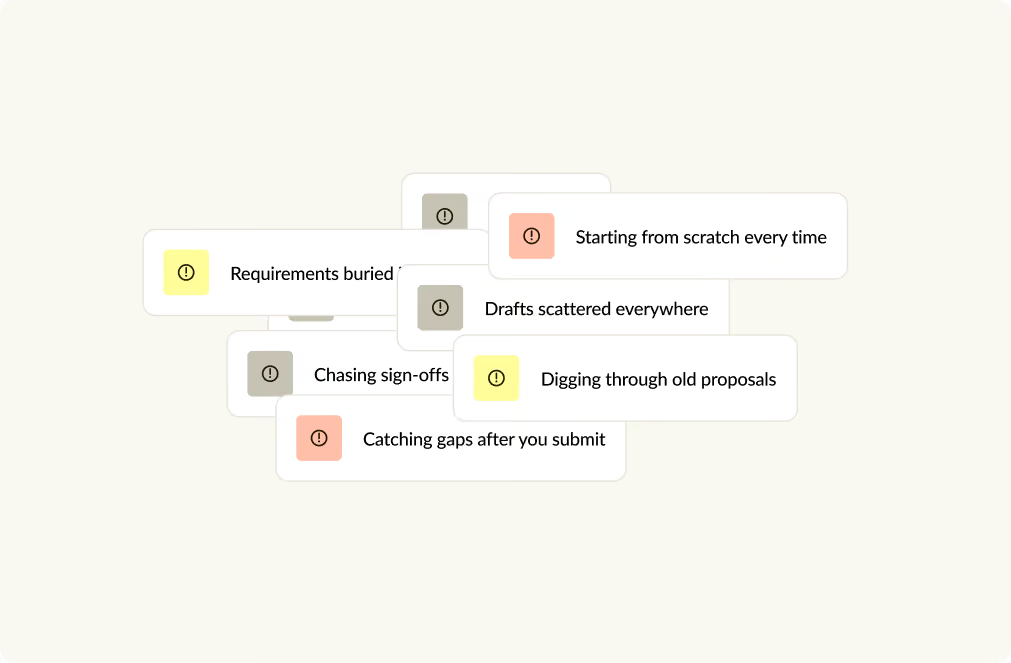
Prospecting the old way meant choosing between "too many" or "too few." Hundreds of opportunities to cull through; multiple sources to cross-check. Or a handful results that might work, and a lingering concern: "What am I missing?"
Describe your program in your own words. We sift through the most up-to-date database in grants and surface only the opportunities worth your time. You never miss a grant that fits, and never waste an afternoon grants that don't.