

March 17, 2026
The Impact Issue #104: Burnout Isn’t A Staffing Problem - It’s A Systems Problem!
What recent data says about workload, culture, AI, and strategy.
Hey there,
If you’re feeling like grant work has become heavier, you’re not alone.
More compliance requests. More proposals in the pipeline. More pressure to “do more with less.” And more urgency.
It’s not just about writing strong grant proposals anymore; it’s about building systems that can sustain the teams writing them.
In this issue of The Impact, we’re digging into what’s really shaping nonprofit teams right now - from burnout and workload strain to responsible AI use and stronger internal infrastructure.
Because long-term impact doesn’t come from pushing harder. It comes from building smarter systems.
Ready? Let’s get into it!
Don’t Miss Out!
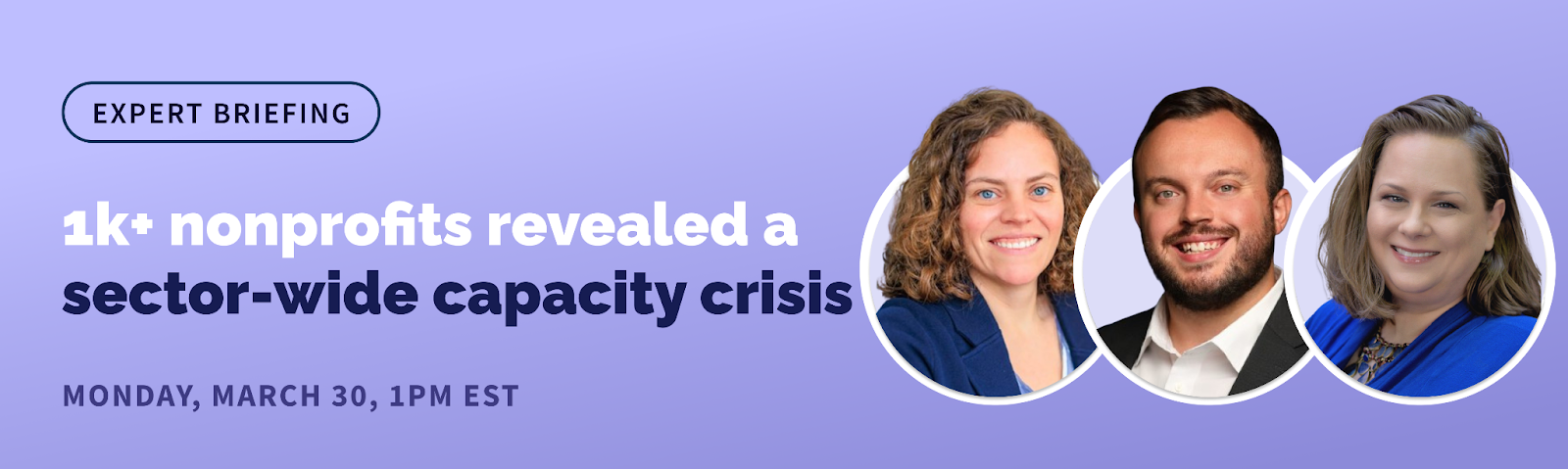
87% of nonprofits have walked away from, delayed, or downsized a grant because of operational burden. 30% left $100K or more on the table.
Shadow work is the invisible labor behind those numbers. It's the manually, meticulously updated spreadsheet only you understand, the financial and impact data you chase down every reporting cycle. And it's costing nonprofits more than most leaders realize.
Join grants experts Fielding Jezreel, Matt Watkins, and Tonia Brown-Kinzel on March 30th as they unveil findings from Instrumentl's first-ever sector-wide study on invisible labor, informed by 1k+ nonprofit professionals.
You'll walk away knowing how to:
- Identify where shadow work is costing your organization real funding
- Make the case for change when leadership can't see the problem
- Reclaim time for strategy, relationships, and growth
Pitfalls and Pointers
According to a report highlighted by the National Federation of Community Broadcasters, 2026 is forcing nonprofit leaders to confront internal culture gaps that have intensified over the last few years, including burnout, unclear strategy, inequitable workloads, and eroding trust.
⚠️ Pitfall: Failing to Acknowledge Burnout in Grant Work
Burnout in grant teams rarely shows up as someone saying, “I’m burned out.”
Instead, it shows up in more subtle ways:
- Slower draft creation
- Tension around revisions
- Reluctance to pursue new opportunities
- Frustration with team members
- Quiet disengagement
Because grant work is both mission-driven and deadline-driven, exhaustion often gets normalized; “It’s just our busy season,” or “This is part of the job.”
Here’s the problem: when burnout goes unaddressed, it compounds. Over time, that silence lowers work quality and hurts organizational culture.
💡 Pointer: Acknowledge Burnout - Then Adapt Strategically
Burnout doesn’t resolve on its own. It resolves with boundaries and better systems.
Here are sustainable, structural solutions to consider:
- Set clear expectations early. Define scope, timelines, roles, and approval processes before proposal work begins to prevent last-minute chaos.
- Align submission volume with actual capacity. If staffing can’t support the plan, narrow your focus instead of stretching the team thinner.
- Protect drafting time. Build internal deadlines that create review space and reduce end-of-cycle rushes.
- Invest in grant readiness before applying. Strengthen programs, clarify budgets, define reporting systems, and align internal strategy before spending valuable human resources on applications.
- Diversify revenue streams. Grants should support sustainability, but they should not bear the entire financial burden of the organization. Diversify revenue streams to ensure that if one goes away, your organization remains stable.
When expectations, capacity, and strategy are aligned, burnout decreases. More importantly, you protect your team’s energy, retain institutional knowledge, and preserve the talent that makes executing your mission possible.
💪 Learn more about grant ethics, capacity and burnout now!
Tech You Should Know
What:
Notion is a flexible workspace that enables nonprofits to centralize governance documents, policies, and compliance materials in a single, structured, searchable hub.
As funders increase due diligence and compliance expectations, having these materials organized - and easy to access - is necessary.
How Grant Writers Can Use It:
- Centralize governance policies. Store bylaws, conflict-of-interest policies, nondiscrimination statements, whistleblower protections, and board charters in one clearly labeled space.
- Organize financial documentation. Maintain financial audit reports, Form 990s, budget templates, and internal financial procedures, so they’re ready when funders (or board members or auditors) request them.
- Create a due diligence hub. Build a page with commonly requested documents, so staff aren’t scrambling during grant submissions or renewal cycles.
🔍 Explore more about nonprofit compliance now!
Expert Perspectives
🏆 Meredith Noble on Using AI Without Losing Your Edge
As AI tools become more common in grant writing, many teams are asking the same question: Will this reduce burnout or create new risks?
Meredith Noble, founder of Learn Grant Writing, emphasizes that AI should support grant writers, not replace strategic thinking.
Here’s her expert advice:
- Use AI to kickstart the writing process. AI can help generate outlines, brainstorm ideas, and draft early sections of a proposal when you’re staring at a blank page.
- Treat AI drafts as a starting point. AI-generated text should always be edited and refined to reflect your organization’s voice, program design, and alignment with the funder’s priorities.
- Craft better prompts for better results. The quality of AI output depends heavily on the prompts you provide. Clear, specific prompts will produce stronger - and more relevant - content.
- Focus your human time where it matters most. AI can speed up repetitive writing tasks, allowing grant professionals to focus more on strategy, storytelling, and funder alignment.
Her core message: AI can accelerate proposal development, but winning grants still requires human insight, customization, and strategic thinking.
👉 Learn more about how to use AI responsibly to write winning proposals!
The Latest Numbers
The 2026 Philanthropy Pulse Report from CCS Fundraising surveyed 600+ nonprofits, and the data tells a clear story about pressure, resilience, and where leaders must focus next.
Here’s what stood out:
- 62% of organizations reported revenue growth last year - but increases favored larger organizations.
- 68% cite donor acquisition as a top fundraising challenge, followed by board/leadership involvement (51%) and retention (48%).
- 62% identify heavy workload and burnout as a top retention challenge - outranking both low pay and poor benefits.
- Only 18% report having a formal succession plan for organizational and fundraising leadership.
- 71% say limited salary budgets are their biggest hiring challenge.
The throughline? Growth is possible, but pressure is real. When growth targets rise, but staffing capacity, compensation flexibility, and leadership infrastructure lag behind, burnout becomes inevitable.
Thankfully, there are ways organizations can reduce burnout and build more sustainable fundraising operations.
How?
🔥 Read about the risks of burnout - and how to avoid them - here!
Opportunities Spotlight
⭐ The Wawa Foundation Grant Program
Who It’s For: Local nonprofits in communities served by Wawa stores, especially those focused on health, hunger relief, and everyday heroes (first responders)
Next Deadline: Applications accepted in January, April, July and October
Grant Amount: Over $2,500
The Details:
- Funds programs aligned with three core focus areas: Health, Hunger, and Everyday Heroes
- Prioritizes organizations located in Wawa’s operating area (PA, NJ, DE, MD, VA, FL, and DC)
- Emphasizes measurable community impact and clear alignment with foundation priorities
🏦 Santander Bank Community Philanthropy Program
Who It’s For: Nonprofits in Santander Bank’s footprint focused on education, workforce development, small business support, and financial empowerment
Next Deadline: LOIs accepted April 6 - July 24, 2026
Grant Amount: Varies
The Details:
- Focuses on economic mobility, particularly through education and job training pathways
- Prioritizes programs that support low- to moderate-income communities
- Funding areas include financial literacy, workforce readiness, entrepreneurship, and access to higher education
- Encourages partnerships that create measurable, community-level impact
Ready for even more opportunities?
🔍 Explore thousands of other grant opportunities now!
Networking Nook
🥂 Happy Hour: Grants After Dark: An Invite-Only Happy Hour
March 23 6:30 PM ET | Washington, DC
Heading to NGMA AGT? Rachel Werner and Instrumentl are hosting a special evening for grant professionals — bites, beverages, and the kind of real conversation that doesn't happen in a conference room. Unwind after a full day of sessions with good company in a cozy DC spot, just steps from the conference.
Spots are limited, so don't wait!
💻 Webinar: The Hidden Strategy Behind Winning Grants
Wednesday, March 18 | 1:15 PM ET
Grant success often comes down to more than the strength of the proposal itself. In this upcoming free webinar, Melanie Lambert of Just Write Grants will explore the strategic work that shapes grant outcomes before the writing begins—things like funder fit, program clarity, and organizational readiness.
If you’re responsible for deciding which grants to pursue (not just writing them), this will be a valuable session.
To check out more recent and upcoming live events, go here.
In Case You Missed It
📑 Article: Best Grant Writing Courses of 2026
At Instrumentl, we’ve partnered with industry leaders to curate the best grant-writing courses for 2026. These exclusive recommendations feature expert insights, actionable strategies, and tools tailored to help you achieve success.
🎙️ Podcast: From Ideas to Impact: Unveiling the Key to Successful Grant Funding
Why aren’t funders supporting your “great” idea? In this episode, Teresa Huff breaks down what actually moves a proposal from interesting to fundable - including clarity, positioning, and alignment. It’s a sharp listen for anyone refining their grant strategy this season.
Ready to Turn Your Grant Strategy Into a System?
Winning grants shouldn’t depend on memory, color-coded spreadsheets, or late-night deadline scrambles.
Instrumentl helps you build a repeatable, data-backed grant strategy - from identifying strong-fit funders to tracking every submission and report in one organized workspace.
If you’re serious about growing funding without growing stress, this is the right move.
Start exploring today with a 14-day free trial (no credit card required!) and see how it fits your workflow.
✋ I’m ready to start my free trial today!
Sign up to get The Impact newsletter delivered to your inbox every week. Subscribe now!
100% Free Grant Writing Resources Straight to Your Inbox
