Discover how Communities in Schools of Pennsylvania (CISPA) transformed their grant-seeking process with Instrumentl. Learn how the tool helped create a collaborative, efficient, and organized culture, enabling the team to secure more funding and support students across Pennsylvania.

TOPIC
AUDIENCE
Does your grant-seeking process feel more like a solo mission than a team effort?
At Communities in School of Pennsylvania (CISPA), we knew that struggle all too well. As the CEO, I watched our grant-seeking process suffer from disorganized workflows and siloed communication. These inefficiencies didn’t just affect our team; they jeopardized our ability to secure the funding we needed to support students across Pennsylvania.
That’s when we discovered Instrumentl, a tool that transformed how our team works together.
In this article, I’ll share our journey with Instrumentl and how it helped us build a more collaborative grant-seeking culture—one that’s efficient, organized, and focused on success.
At CISPA, our grant-seeking process was anything but efficient.
As a nonprofit dedicated to supporting students, securing funding was—and still is—critical to our mission. However, before Instrumentl, our team struggled with challenges that made this work harder than it needed to be:
These challenges weren’t just frustrating—they were costly. Research shows that poor collaboration can reduce workplace performance by up to 21% and increase turnover rates.
We knew something had to change. Our mission was too important to risk losing funding opportunities due to inefficiencies. We needed a solution that could:
This search led us to Instrumentl, which did more than just fix our processes—it helped us build a truly collaborative grant-seeking culture.
Finding a tool to streamline our grant-seeking process was not an easy task. There’s no shortage of grant management tools on the market, all of which offer different features at different price points.
After exploring lots of these options, Instrumentl emerged as the clear winner—for a few reasons:
Beyond its features, Instrumentl’s focus on nonprofits was clear. From their webinars to educational resources, the platform demonstrated a deep understanding of our challenges.
While it was a top-tier investment, the tool’s value and impact made it an easy choice for our team.
Adopting Instrumentl solved our workflow challenges and transformed how our team collaborated on every aspect of grant-seeking. Keep reading to see how some key features of Instrumentl really helped us level up our grants game.
Before Instrumentl, managing grant research and applications at CISPA was overwhelming.
We relied on spreadsheets to track opportunities, stored critical documents in random folders, and juggled countless email chains to manage deadlines. This disjointed system caused errors, missed opportunities, and wasted valuable time.
Instrumentl changed everything. Here’s how:

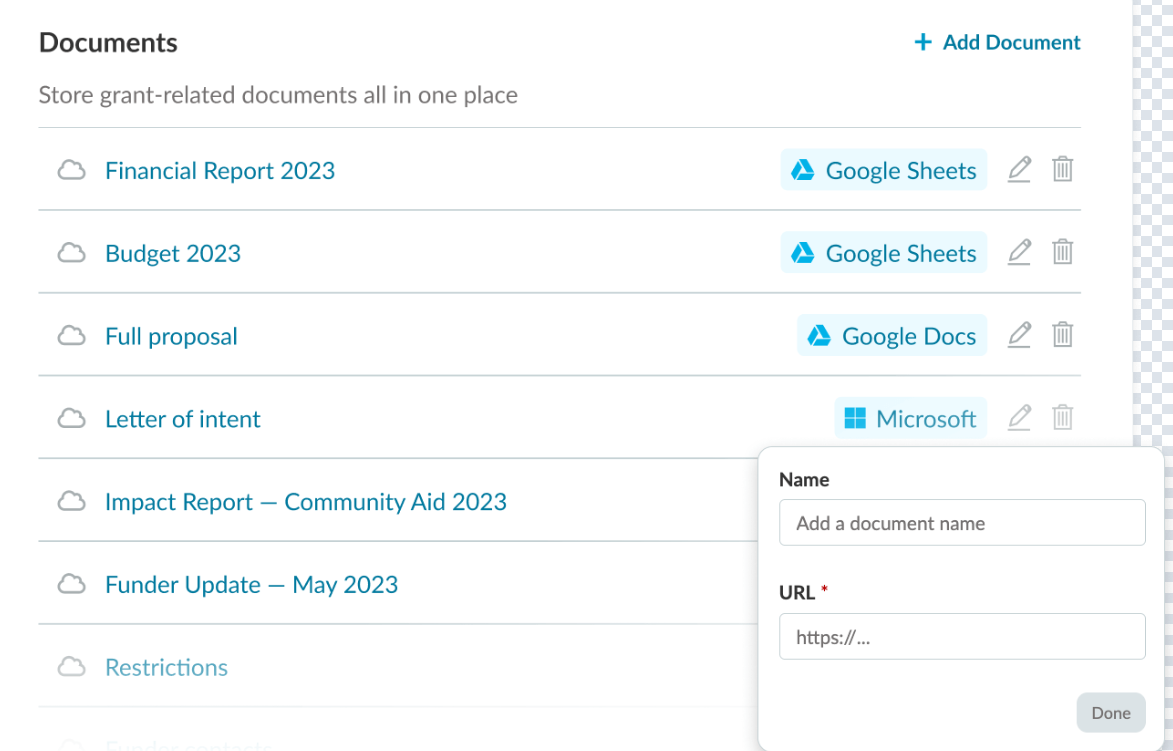

Here’s the result: tangible, day-to-day relief. Instead of juggling disconnected tools, team members can now focus on meaningful work—researching grants, strengthening proposals, and staying aligned on priorities.
Instrumentl also helped us create a more unified and cohesive approach to managing tasks.
Here’s how:
Check out the snapshot of our task tracker below. You can see the task name, deadlines, and the initials of the staff member it is assigned to all in one place.


Effective grant management doesn’t end with submission—tracking awards and meeting funder requirements is a team effort that demands clear collaboration.
Instrumentl’s post-award tracking features foster transparency, accountability, and streamlined workflows across our team.
Here’s how:


At CISPA, Instrumentl has turned post-award management into a team-oriented process. Tasks are clearly assigned and tracked, with automated reminders to keep us all on schedule. Financial updates and deliverables are no longer siloed; instead, they’re accessible to the whole team, promoting transparency and reducing reliance on one person to manage the process.
Practical Benefits of Building a Collaborative Culture
Instrumentl’s collaborative features have not only streamlined our grant-seeking process but also transformed our team’s culture at CISPA. What was once a fragmented and stressful workflow has become a well-coordinated and efficient system, delivering tangible benefits to our organization—and funneling more money into our mission.
Key Outcomes & Early Wins:
As we continue to use Instrumentl, we’re excited to evaluate the long-term results of these changes after one year. Early indicators suggest we’re not only becoming more efficient but also positioning ourselves for greater success in securing the funding we need to support our mission.
Wrapping Up: Transforming Teamwork With Instrumentl
At CISPA, we’ve experienced firsthand how Instrumentl can transform a siloed, fragmented grant-seeking process into a collaborative, cohesive effort. By centralizing research, communication, and task management, Instrumentl has not only streamlined our workflows but also fostered a culture of teamwork and accountability.
This cultural shift is doing more than improving our internal processes—it’s driving real results. From higher-quality proposals to fewer missed deadlines and stronger alignment across our team, Instrumentl is helping us secure the funding we need to fulfill our mission more effectively.
If you’re ready to experience these benefits for your organization, it’s time to make the shift. Build a collaborative grant-seeking culture within your team by starting a 14-day free trial with Instrumentl today—and see the difference it can make for your mission.
Collaborative grant seeking involves organizations or individuals working together to apply for funding. This approach pools resources, expertise, and networks to improve the chances of securing grants.
Collaboration is important because it allows groups to combine their strengths, increase their efficiency, and present funders with a more comprehensive and compelling proposal.
Identify potential collaborators by networking within your field, attending industry events, and reaching out to organizations with complementary missions or goals.
Challenges include aligning goals among partners, sharing resources equitably, and managing communication effectively throughout the application process.
To ensure success, establish clear roles, create a detailed plan, maintain open communication, and address potential conflicts proactively.
Table of contents

